
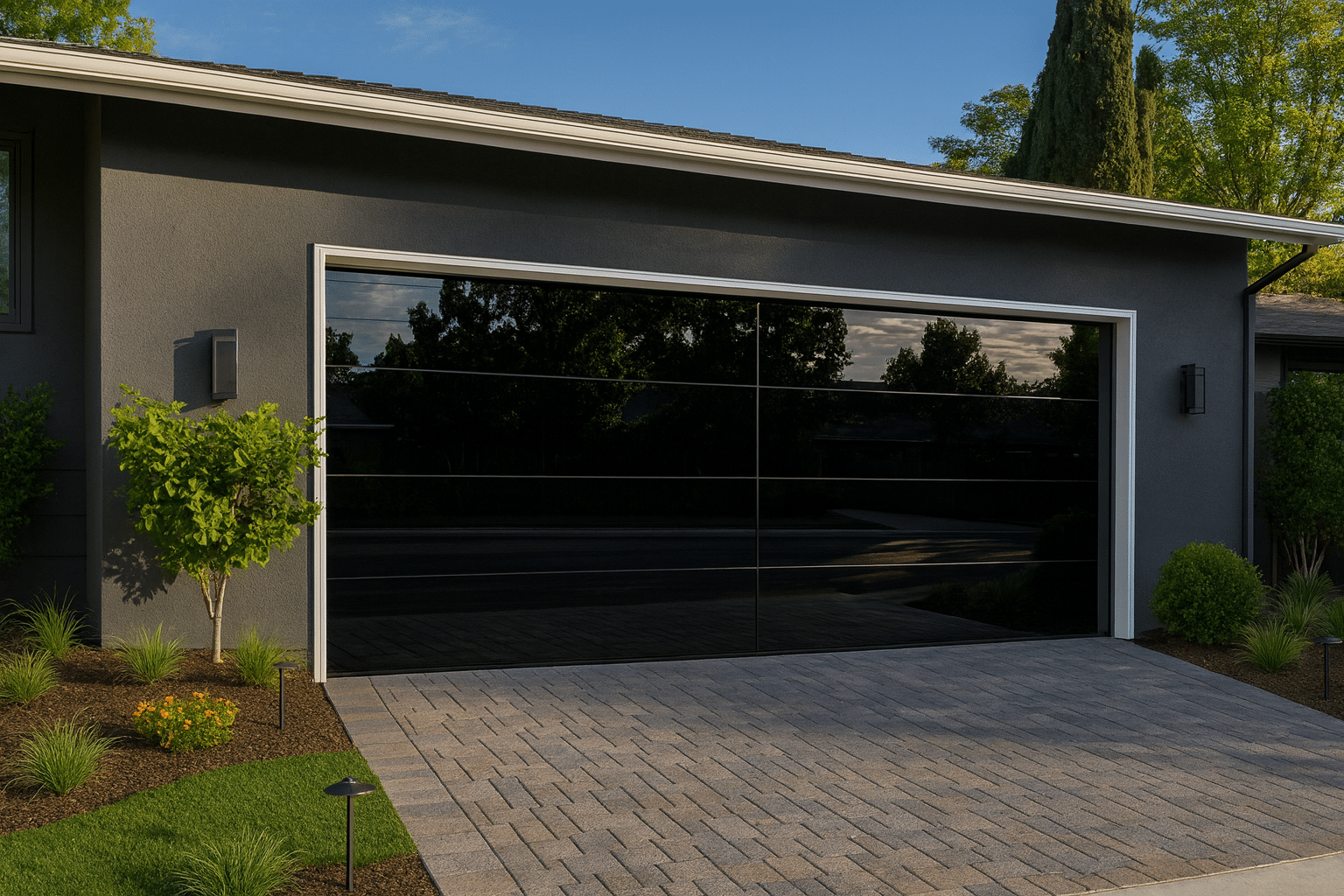
A dented or cracked garage door panel changes the look of the entire front of your home. Before deciding whether to replace the panel, replace multiple panels, or replace the full door, the first thing you need is an accurate picture of what the dimensions actually are and how panel sizing works across different door configurations.
Garage door panel dimensions are not universal. They vary based on the total door width, total door height, the number of panels on the door, and the manufacturer. Getting those measurements right before ordering a replacement is the difference between a panel that fits and a panel that cannot be installed. This guide covers standard sizing, how to measure correctly, when single-panel replacement is a viable option, and what wooden garage door panel replacement specifically involves.
How Garage Door Panel Dimensions Work
A sectional garage door is made up of individual horizontal panels stacked on top of each other. The door’s total height is divided across those panels, and the total width runs the full opening. Each panel spans the full width of the door and accounts for a portion of the height.
Panel Width
Panel width corresponds directly to the garage door’s opening width. Standard single-car garage door widths are 8 feet and 9 feet. Standard two-car garage door widths are 16 feet and 18 feet, with some installations running 20 feet on wider openings. Custom widths exist but are less common in residential construction.
The panel itself matches the door width minus any end stile or frame allowance depending on the manufacturer’s construction method. When ordering a replacement panel, the width listed is the door’s nominal opening width, not a separately measured panel dimension.
Panel Height
Panel height is where more variation exists. A standard residential garage door is 7 feet tall, though 8-foot height is increasingly common in newer construction, and some homes have 9-foot or 10-foot doors to accommodate taller vehicles or custom architectural clearances.
That total door height is divided across the number of panels. A 7-foot door with four panels uses panels that are approximately 21 inches tall each. A 7-foot door with three panels uses panels closer to 28 inches tall. An 8-foot door with four panels uses panels approximately 24 inches tall.
The exact panel height varies slightly by manufacturer, which is why matching by brand and model is more reliable than trying to source a panel by dimension alone.
Standard Garage Door Panel Dimensions by Door Size
The following represent the most common residential configurations. These are nominal dimensions. Actual panel dimensions may vary by a fraction of an inch depending on the manufacturer and construction year.
8 x 7 foot door (4 panels): Each panel is approximately 96 inches wide by 21 inches tall.
9 x 7 foot door (4 panels): Each panel is approximately 108 inches wide by 21 inches tall.
16 x 7 foot door (4 panels): Each panel is approximately 192 inches wide by 21 inches tall.
18 x 7 foot door (4 panels): Each panel is approximately 216 inches wide by 21 inches tall.
8 x 8 foot door (4 panels): Each panel is approximately 96 inches wide by 24 inches tall.
16 x 8 foot door (4 panels): Each panel is approximately 192 inches wide by 24 inches tall.
Three-panel configurations exist on some older or lower-headroom installations, producing taller individual panels across the same door heights.
How to Measure a Garage Door Panel for Replacement
Before contacting a supplier or garage door company about a replacement panel, take accurate measurements and note additional identifying information from the door itself.
Measure the width of the panel from the outer edge on one side to the outer edge on the other side. Measure at the widest point. Then measure the height of the panel from the bottom edge to the top edge at the center of the panel, avoiding the joints at either end where the panel connects to adjacent sections.
Beyond dimensions, locate the manufacturer’s label on one of the existing panels. This is typically found on the inside surface of the top or bottom panel and includes the brand name, model or series name, and sometimes a production date or batch code. That information is what a manufacturer or dealer uses to pull the correct panel from inventory, because panels within the same nominal size can vary in profile design, embossing pattern, and edge detail between model lines and production years.
If the label is no longer legible, photograph the panel’s surface texture and edge profile. Many manufacturers can identify the series from those details.
Can You Replace One Panel of a Garage Door?
Single-panel replacement is one of the most common questions homeowners have after a vehicle backs into a garage door or a storm leaves one section dented. The short answer is yes, in many cases you can replace one panel of a garage door, but several conditions determine whether it is the right approach.
The door must still be available from the manufacturer. If the door is more than ten to fifteen years old, the panel may no longer be in production. Manufacturers discontinue series regularly, and an out-of-production panel may not be sourceable as a direct replacement.
The replacement panel must match the existing door. Panel profiles, embossing patterns, and paint finishes change between model years. Even within the same manufacturer, a panel from a different production run may not match closely enough to be invisible in the finished door.
The structural condition of the surrounding panels matters. If adjacent panels have significant corrosion, warping, or prior damage, replacing only the one visibly damaged section leaves a door that is still compromised. In that scenario, replacing multiple panels or the full door is the more cost-effective long-term decision.
The door’s hardware and track system must be in sound condition. A panel replacement is not worth the investment on a door whose springs, cables, or track are at end of life. Evaluate the full system before committing to panel-only repair.
When the panel is available, the surrounding door is in good condition, and the replacement is a close visual match, single-panel replacement is a practical and cost-effective repair. When those conditions are not met, a full door replacement typically delivers better value.
Wooden Garage Door Panel Replacement: What Makes It Different
Wood garage doors introduce additional considerations that steel and aluminum doors do not. Wooden garage door panel replacement requires matching not just the panel dimensions but the wood species, panel construction method, and finish.
Wood garage door panels are constructed using either solid wood or an engineered wood composite. Solid wood is heavier and more prone to expansion and contraction with humidity. Engineered composites are more dimensionally stable and hold up better in South Florida’s heat and moisture. When replacing a wooden panel, the replacement must match the existing panels in rail and stile width, panel inset depth, and wood species or composite material if the door is to be stained.
Sourcing replacement wood panels requires working with the original manufacturer if the series is still in production, or with a custom millwork shop that can fabricate a matching panel to your specifications. Custom fabrication costs more and carries longer lead times than a stock steel replacement, but it is the right path when the original series is no longer available.
Damaged Garage Door Panels: When Replacement Makes Sense
Not every dent or scratch requires a full panel replacement. Minor surface damage that does not affect the panel’s structural integrity or joint seal can sometimes be repaired without a swap. Deep dents that distort the panel’s cross section, cracks through the panel face, or damage at the joints that breaks the seal between sections are the thresholds where replacement becomes necessary.
Damaged garage door panels left in place create compounding problems. A bent panel stresses the hinges connecting it to adjacent sections. In steel and aluminum, broken factory finish creates an entry point for corrosion. In wood, cracks allow moisture infiltration that accelerates rot.
The right call between panel replacement and full door replacement depends on the panel’s availability, how many sections are affected, and the door’s overall age and condition. A single damaged panel on a newer door in good shape is worth replacing. The same damage on a door that is fifteen years old with worn hardware is often the better argument for a full replacement that resets the system.
Get the Right Panel or Door for Your Home
Understanding garage door panel dimensions, what drives single-panel replacement decisions, and what wood panel replacement involves gives you an accurate starting point before you order anything or commit to a repair direction. The right answer depends on the door’s age, the panel’s availability, and the condition of the surrounding system.
Rocket Garage Doors handles garage door panel replacement and full door replacement for homeowners in Oakland Park, Fort Lauderdale, Pompano Beach, and throughout South Florida. Our team can identify your door’s panel specifications, confirm availability, and give you a straight assessment of whether a panel replacement or a full door is the better investment for your situation. Call us at (954) 256-2138 or contact our team to schedule an assessment.
Frequently Asked Questions
What are standard garage door panel dimensions?
Standard panel width matches the door’s opening width, which is typically 8 or 9 feet for single-car doors and 16 or 18 feet for two-car doors. Panel height depends on the total door height and the number of panels. A 7-foot door with four panels uses panels approximately 21 inches tall. An 8-foot door with four panels uses panels approximately 24 inches tall. Exact dimensions vary by manufacturer and model series.
Can you replace one panel of a garage door?
Yes, single-panel replacement is possible when the panel is still available from the manufacturer, the replacement is a close visual match to the existing door, and the surrounding panels and hardware are in good condition. If the door is older and the panel is out of production, or if adjacent panels are worn or damaged, a full door replacement is often the more cost-effective path.
What should I know about wooden garage door panel replacement?
Wooden garage door panel replacement requires matching the panel dimensions, wood species or composite material, rail and stile width, panel inset depth, and finish. In South Florida’s humid climate, engineered wood composites perform better than solid wood over time. If the original manufacturer no longer produces the series, a custom millwork shop can fabricate a matching panel, though lead times and costs are higher than stock steel replacements.
What causes garage door panels to need replacement?
Damaged garage door panels typically result from vehicle impact, storm debris, or long-term weathering. Damage that distorts the panel’s cross section, cracks through the panel face, or compromises the joint seal between sections requires replacement. Surface scratches that do not break the structural integrity can sometimes be repaired without a full panel swap.
How do I find the right replacement panel for my door?
Locate the manufacturer’s label on the inside surface of an existing panel. It typically lists the brand, model or series, and production information that a dealer uses to pull the correct replacement. If the label is gone, photograph the panel’s surface texture and edge profile. A garage door professional can often identify the series from those details and confirm whether the panel is still available.
Is it better to replace one panel or the whole garage door?
Panel replacement makes sense when the panel is available, the door is relatively new, and the surrounding hardware is in good condition. Full door replacement is usually the better investment when the door is more than ten to fifteen years old, the panel is out of production, multiple sections are damaged, or the springs and hardware are approaching end of life. Replacing the full door resets the service life of the entire system rather than extending a door that is already in decline.