
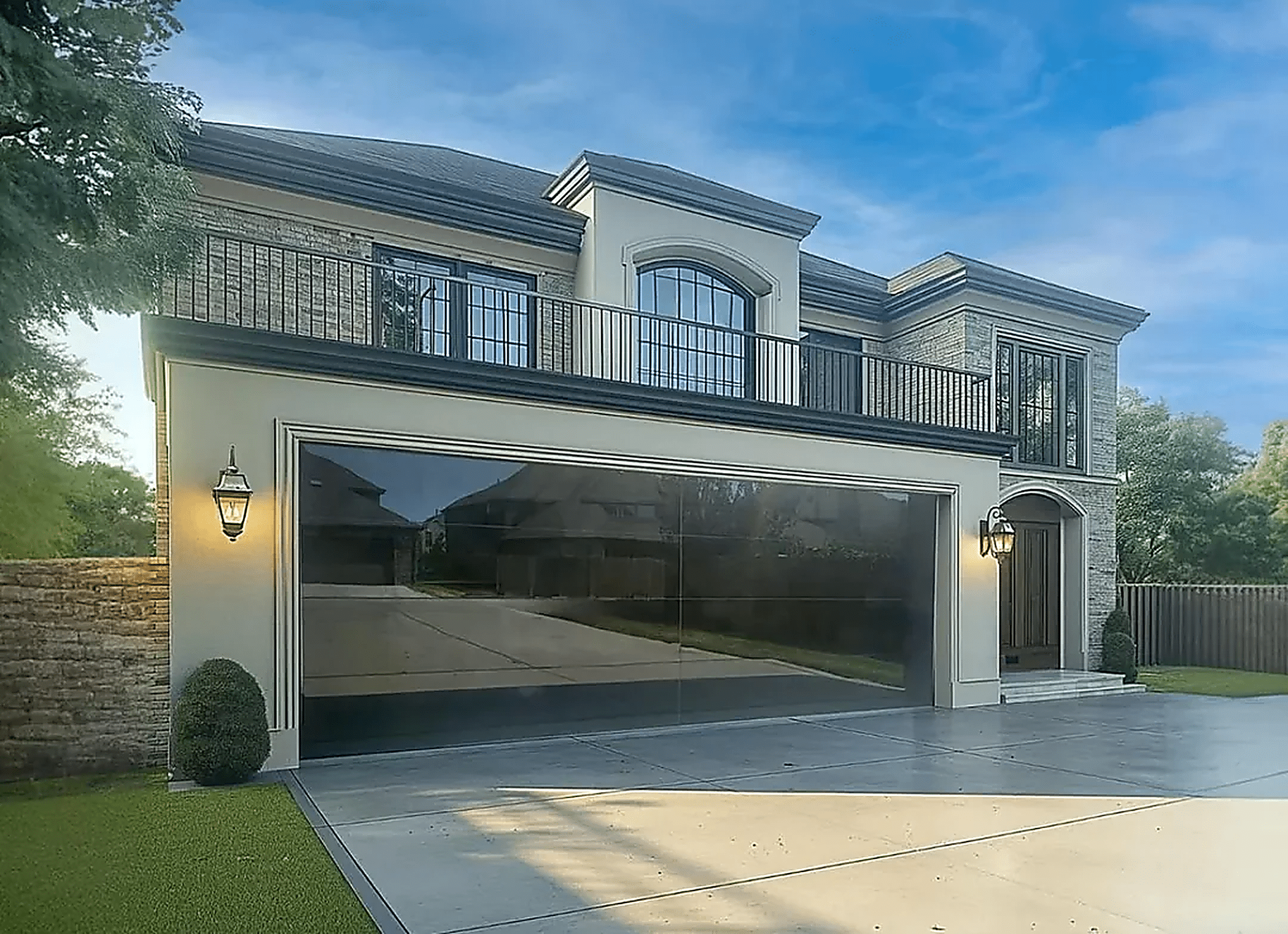
Replacing your garage door before hurricane season can seem straightforward. Find an impact-rated model, make sure it fits your home, and have it installed before the next storm arrives.
The problem is that the word “impact” does not tell you everything you need to know. A garage door can be tested for impact resistance while having different wind-pressure ratings, size limitations, installation requirements, and approvals for where it can legally be used. Those differences become especially important in South Florida, where Miami-Dade and Broward Counties fall within Florida’s High-Velocity Hurricane Zone (HVHZ).
Choosing a door without understanding those details can mean paying for an upgrade that does not meet the requirements for your opening, creating permitting problems, or assuming your home has more storm protection than the installed system actually provides.
Before choosing impact garage doors based on a product name or hurricane claim, it helps to understand what the ratings mean, what approvals to check, and what factors determine whether a particular door is appropriate for your South Florida home.
What Does an Impact Garage Door Actually Protect Against?
Impact resistance refers to a garage door assembly’s ability to meet specified testing requirements for windborne debris. During a hurricane, that matters because the door may be exposed to more than sustained wind.
Roofing materials, branches, signs, construction materials, and other debris can become airborne. A garage door that cannot resist an impact may be damaged or breached even before wind pressure becomes the main concern.
Florida regulates products marketed for hurricane, windstorm, or windborne-debris impact protection. State law requires qualifying products marketed for these purposes to go through an applicable product evaluation and approval process.
Impact resistance, however, is only one part of the door’s storm performance.
Impact Resistance and Wind Resistance Are Different
A hurricane garage door also has to resist the pressure exerted on the door as wind pushes toward it and pulls away from it.
This is why Florida product approvals include positive and negative design-pressure ratings in addition to impact-resistance information. The Florida Building Commission database even contains doors that are listed as impact resistant but are not approved for use in the HVHZ, demonstrating why these specifications need to be checked individually.
A homeowner should therefore avoid assuming:
Impact resistant = approved everywhere in South Florida.
The door must be suitable for the location, opening size, installation configuration, required design pressures, and applicable local code requirements.
Why the Garage Door Matters During a Hurricane
The garage door covers one of the largest openings in many South Florida homes. Its size is one reason its performance during severe winds deserves particular attention.
FEMA has documented how large garage doors can deflect, pull away from their tracks, or collapse under severe wind pressure. When a garage door fails, wind can enter the garage and dramatically change the pressures acting on the house. That can contribute to additional damage involving walls, windows, doors, and the roof.
This means hurricane protection should consider the entire garage door assembly rather than focusing only on the panels.
Tracks, brackets, fasteners, hinges, reinforcement, attachment points, glazing, and the way the system is secured to the structure can all affect whether the installed door performs as its approval requires.
An approved door installed outside the conditions covered by its approval is not the same thing as having the properly specified system for the home.
South Florida Location Changes What You Need to Check
“Hurricane rated” is often used as though every Florida home has identical requirements. They do not.
Your property’s location is one of the first factors that needs to be considered because Florida’s building requirements differ according to wind conditions and jurisdiction.
Miami-Dade and Broward Are in the HVHZ
Miami-Dade and Broward Counties make up Florida’s High-Velocity Hurricane Zone. Products installed in these areas may need to satisfy requirements that do not apply in the same way elsewhere in the state.
For a homeowner in Fort Lauderdale, Hollywood, Pembroke Pines, Coral Springs, Miami, or another community within these counties, simply finding a Florida-approved garage door is therefore not enough information.
You also need to determine whether the exact door model and configuration are approved for HVHZ use.
Palm Beach County Is Not Part of the HVHZ
Palm Beach County faces significant hurricane exposure, but it is outside the Miami-Dade/Broward HVHZ designation.
That does not mean hurricane protection becomes optional or that any impact door will work. The required product and design pressures still need to match the property and applicable building requirements.
The important point is that a homeowner in Boca Raton may not be working under exactly the same product requirements as a homeowner in Fort Lauderdale, even though both properties are in South Florida.
What Should You Check Before Buying Impact Garage Doors?
The product approval documents provide much more useful information than a showroom label saying “hurricane rated.”
Before settling on a specific door, there are several details worth reviewing with your garage door contractor.
Product Approval
Ask for the exact approval associated with the proposed garage door model and configuration.
Florida maintains a product approval database where approved products can be searched by manufacturer, product model, FL number, HVHZ approval, impact resistance, and design pressure.
Miami-Dade also maintains its Notice of Acceptance (NOA) product approval system.
The approval should correspond to the door that will actually be installed, not merely the manufacturer as a whole.
HVHZ Approval
If your home is in Miami-Dade or Broward County, confirm whether the specific product is approved for use in the HVHZ.
Do not infer this from impact resistance alone.
Florida’s product database separates “Approved for use in HVHZ” from “Impact Resistant,” so the two should be checked separately.
Design Pressure
Garage doors have positive and negative design-pressure ratings. The appropriate requirements can depend on factors such as the building, location, opening, exposure, and door dimensions.
This is another reason choosing solely according to an advertised wind speed can be misleading. What matters is whether the approved door configuration satisfies the requirements for the particular installation.
Door Size
A product approval is not unlimited.
The same garage door series can have different ratings and limitations depending on its width, height, construction, glazing, and other configuration details. Florida approval listings show these differences between individual models and sizes.
A wider two-car opening may therefore require a different approved configuration from a smaller single-car garage door.
Impact-Resistant Windows
Adding windows does not automatically preserve the impact rating of a garage door.
If you want decorative or full-view glazing, make sure the exact glazing option is included within the approved configuration. Florida product listings identify models where impact-resistant glazing is specifically permitted as part of the approved assembly.
This allows you to consider natural light and exterior design without treating the windows as an afterthought.
Does an Existing Garage Door Need Replacement or Reinforcement?
Not every older garage door presents the same problem, which is why the first step should be evaluating the existing system rather than assuming reinforcement or replacement is automatically the correct answer.
Some garage doors may have manufacturer-approved reinforcement options. Others may be outdated, damaged, poorly fitted, missing required components, or unsuitable for the level of protection the homeowner wants.
Reinforcement also should not be confused with converting any existing garage door into an impact-rated product.
FEMA notes that some doors can be strengthened using manufacturer-designed reinforcement systems, but the suitability of a retrofit depends on the particular door and installation.
If the goal is code-compliant impact protection, the existing door, available approvals, condition of the assembly, and applicable permitting requirements should all be reviewed before deciding between reinforcement and complete replacement.
Does Replacing an Impact Garage Door Require a Permit?
Permit requirements should be confirmed with the authority having jurisdiction for your property, but South Florida homeowners should not assume a garage door replacement is simply a remove-and-replace project with no documentation.
Miami-Dade County, for example, requires a permit application for a stand-alone garage door replacement along with information showing the size of the proposed garage door and its product approval number. The county also requires the applicable current NOA and accepts Florida Building Commission product approvals.
The product approval matters because it links the installed door to tested specifications, allowable dimensions, design pressures, anchoring details, and installation requirements.
A professional installation should therefore consider the approval and permitting requirements before the old door is removed, not after the replacement is already in place.
An Impact Rating Does Not Replace Proper Installation
Buying the right door is only half of the decision.
Product approvals include detailed installation requirements because the performance of the assembly depends on how it is attached and configured. The door, tracks, supports, fasteners, brackets, framing connections, and other components have to work together.
Post-hurricane investigations have documented garage door failures involving track deformation, roller separation, and inadequate attachment. FEMA has also documented instances in which installation details contributed to the failure of doors during severe storms.
That makes installation quality especially important for a product being purchased specifically for hurricane protection.
A strong door installed incorrectly can still leave a weak point at one of the largest openings in the home.
Choose the Door for Your Home, Not Just the Hurricane Label
South Florida homeowners have good reason to pay attention to impact protection, but “impact rated” should be the beginning of the conversation rather than the end of it.
The right garage door needs to match your home’s location, opening dimensions, required design pressures, local approval requirements, desired style, and actual installation conditions. Miami-Dade and Broward homeowners also need to pay particular attention to HVHZ approval.
Rocket Garage Doors helps homeowners across Broward, Miami-Dade, and Palm Beach Counties evaluate hurricane-rated and impact-ready garage door options for their properties. If you are replacing an older door or want to know whether your current system is ready for South Florida storm conditions, contact Rocket Garage Doors to schedule an evaluation and discuss the right garage door for your home.
Frequently Asked Questions About Impact Garage Doors
Are impact garage doors the same as hurricane-rated garage doors?
Not necessarily. Impact resistance addresses testing for windborne debris, while hurricane performance can also involve wind-pressure ratings, approved dimensions, anchoring, and other requirements. Always review the specific product approval rather than relying only on the terminology used in advertising.
Do I need an impact garage door in South Florida?
Requirements depend on your location, building, opening, and applicable building code. Miami-Dade and Broward Counties are part of Florida’s High-Velocity Hurricane Zone, so homeowners there should pay particular attention to products approved for HVHZ use.
What is a Miami-Dade NOA?
A Notice of Acceptance, or NOA, is an approval issued through Miami-Dade County’s Product Control process after technical documentation for a construction product or assembly has been reviewed. NOAs have defined scopes, limitations, and expiration dates.
Is every Florida-approved garage door approved for Miami-Dade and Broward?
No. Florida’s product approval database separately identifies whether a product is approved for use in the HVHZ. Some approved products are permitted outside the HVHZ but not within it.
What does design pressure mean on a garage door?
Design-pressure ratings indicate the positive and negative pressures the approved door assembly is designed and tested to resist under specified conditions. The required rating should be determined for the particular property and installation rather than chosen solely from a general hurricane-wind claim.
Can an impact garage door have windows?
Yes, some approved impact-resistant garage doors include impact-resistant glazing options. The windows and configuration need to be covered by the applicable product approval.
Can I reinforce my current garage door instead of replacing it?
Possibly, depending on the existing door, its condition, the manufacturer, available reinforcement system, and the protection you are trying to achieve. Reinforcement should not automatically be treated as equivalent to installing an approved impact-resistant garage door.
Can a garage door fail even if the panels are strong?
Yes. The garage door operates as an assembly. Tracks, rollers, supports, brackets, fasteners, and attachment points also affect performance. FEMA investigations have documented garage door failures involving deformation and separation of these components.
Why is garage door failure dangerous during a hurricane?
If a large garage door opening is breached, wind can enter the structure and increase internal pressure. FEMA has documented how this can contribute to additional damage to walls and roofs.
How do I know whether an impact garage door is approved?
Ask for the exact Florida Product Approval number or Miami-Dade NOA associated with the proposed door. Verify the model, dimensions, impact status, design pressures, HVHZ status when applicable, and installation limitations rather than checking the manufacturer name alone.
Do I need a permit to replace my garage door in Miami-Dade County?
Miami-Dade County lists a building permit application, door dimensions, product approval information, and a current NOA among the requirements for stand-alone garage door replacement permits. Requirements in other jurisdictions should be confirmed with the applicable building department.
How often should an impact garage door be inspected?
There is no single inspection interval that applies to every door and situation. However, homeowners should pay attention to damaged panels, loose hardware, track problems, unusual movement, poor closure, corrosion, or damage following a severe storm. If something has changed in the system, have it evaluated rather than assuming the original impact rating means the door remains unaffected.