
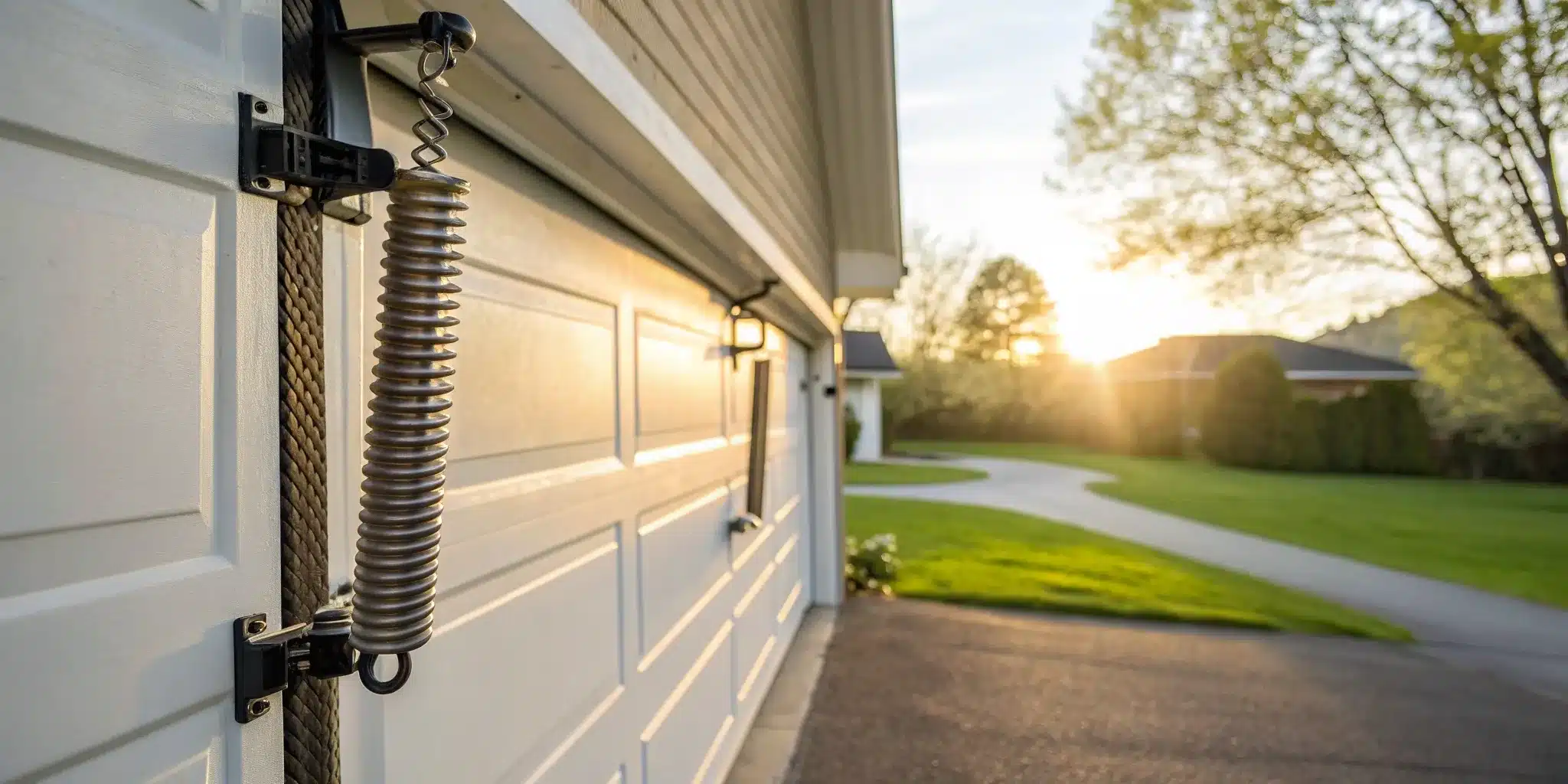
Springs do more of the work than most homeowners realize. Every time your garage door opens and closes, the springs carry the load, counterbalancing a door that can weigh anywhere from 100 to 400 pounds depending on its size and material. When the springs are properly maintained, the door moves smoothly, the opener runs quietly, and the hardware wears evenly. When they are not, the signs tend to escalate quickly from sluggish movement to sudden failure.
Understanding garage door spring maintenance, what the different spring types do, how long they last, and what an adjustment actually involves, is what helps you stay ahead of a breakdown instead of reacting to one. This guide covers the full picture: how to inspect your springs, what a realistic lifespan looks like, when adjustment is appropriate, and when the repair is one that needs a professional.
What Are the Types of Garage Door Springs?
Before any inspection or maintenance can be done correctly, it helps to know which type of spring system your door uses. The two main types of garage door springs are torsion springs and extension springs, and they behave differently, wear differently, and require different handling.
Torsion Springs
Torsion springs are mounted horizontally above the garage door opening on a metal shaft. They work by winding and unwinding under tension, storing energy as the door closes and releasing it to assist the opener as the door opens. Most modern residential garage doors use torsion springs because they offer better balance, longer cycle life, and more controlled movement than extension springs.
A standard torsion spring is rated for 10,000 to 15,000 cycles. One cycle equals one full open-and-close sequence. For a household that uses the garage door four times per day, that translates to roughly seven to ten years of service life under normal conditions.
Extension Springs
Extension springs are mounted on the horizontal tracks on either side of the door. They stretch and contract as the door moves, using that tension to assist with lifting. Extension springs are more common on older installations and lighter doors. They typically carry a lower cycle rating than torsion springs and require safety cables threaded through the center of each spring to contain the coil if it breaks under tension.
Knowing which system your garage door has determines what you are looking at during an inspection and what kind of maintenance applies.
Garage Door Springs Lifespan: What to Expect
The garage door springs lifespan varies based on the spring type, the quality of the spring, how frequently the door is used, and how well the springs are maintained. A few factors that affect how long springs last include:
Cycle rating: Springs are manufactured with a rated cycle life. Standard springs are rated at 10,000 cycles. High-cycle springs, which are available as an upgrade, are rated at 25,000 to 100,000 cycles and are worth specifying on doors that see heavy daily use.
Lubrication: Springs that are properly lubricated with a silicone or lithium-based spray experience less friction and wear more slowly. Springs that run dry develop coil wear faster and are more prone to cracking at the ends or along the coil body.
Climate and humidity: In South Florida’s humid coastal environment, springs are exposed to more moisture than springs in drier climates. Corrosion shortens spring life significantly. Routine lubrication creates a protective barrier against rust and corrosion that extends the functional life of the spring.
Balance and adjustment: A door that is out of balance puts uneven stress on the springs. When one spring carries more of the load than it should, that spring wears out faster than its rated cycle life suggests. Keeping the door properly balanced distributes wear evenly across both springs.
Most standard torsion springs last between seven and twelve years with proper maintenance. Extension springs typically reach the five to eight year range under similar conditions.
Garage Door Spring Maintenance: What to Inspect
A basic spring maintenance inspection does not require tools or technical knowledge. What it requires is knowing what to look for and committing to doing it on a regular schedule, ideally twice per year.
Visual Inspection of the Springs
With the door fully closed, look at the springs carefully. On a torsion spring system, look along the coil body for gaps in the coil. A torsion spring that has broken will show a visible gap of an inch or more between the separated coil sections. Look for signs of rust, especially at the ends of the spring where it contacts the winding cones. Surface rust that has not yet caused pitting can often be addressed with lubrication. Deep rust or flaking corrosion is a sign the spring is approaching end of life.
On extension springs, look for stretched or deformed coil sections, rust, and inspect the safety cable to confirm it is properly threaded through the spring. A missing safety cable on an extension spring is a safety hazard regardless of the spring’s condition.
Check the Door Balance
Disconnect the automatic opener by pulling the red emergency release cord. Manually lift the door to about waist height and release it. A properly balanced door should stay in place without drifting up or dropping down. If the door drifts down, the springs are either under-tensioned or worn out and losing their ability to hold tension. If the door drifts up, the springs are over-tensioned.
A door that fails the balance test needs a professional adjustment. Do not attempt to correct spring tension yourself.
Listen for Sound Changes
Changes in how the garage door sounds during operation often indicate a spring issue before a visible problem appears. A loud bang, especially one that sounds like a gunshot coming from the garage, almost always indicates a spring has broken under tension. Squeaking or grinding as the door moves can indicate dry springs, worn bearings, or a door that has shifted out of alignment.
Lubricate the Springs
Lubrication is the single most effective maintenance step a homeowner can perform. Use a silicone-based spray or a garage door lubricant, not WD-40, which is a solvent and not a long-term lubricant. Apply the lubricant along the coil body of torsion springs and along the extension spring coils. Wipe away any excess to prevent dripping onto the floor or door panels.
Garage Door Spring Adjustment: When It Is and Is Not a DIY Task
Garage door spring adjustment is the process of increasing or decreasing the tension in the springs to restore proper door balance and movement. It is one of the most frequently needed maintenance corrections, and it is also one of the most dangerous repairs a homeowner can attempt without training.
Torsion springs are wound to specific tension levels using winding bars. The springs store an enormous amount of energy, and an error during adjustment can cause the spring to release that energy suddenly, resulting in serious injury. This is not a repair that benefits from a confident approach in the absence of proper training.
Extension spring tension can be adjusted by moving the spring hook to a different hole on the track bracket, but this also requires the door to be in the right position and the cable to be properly managed during the process.
Both types of spring adjustment should be performed by a licensed garage door technician who has the tools and training to do the work safely. For homeowners, the right maintenance role is inspection and lubrication, with adjustments left to the professional.
When to Call a Pro for Garage Door Spring Repair
Some situations call for professional service immediately. Call a garage door professional if you see or experience any of the following:
A visible gap in the torsion spring coil, which means the spring has broken and the door should not be operated until the spring is replaced. A broken spring puts the full weight of the door on the opener, which can damage the motor, strip the gears, or cause the door to drop unexpectedly.
The door fails the balance test and drifts in either direction when released at waist height.
The door is slow to open, strains noticeably during operation, or reverses before fully opening, all of which can indicate spring tension issues.
You hear a loud bang from the garage that coincides with the door becoming difficult or impossible to operate.
Any spring showing deep corrosion, visible cracking along the coil, or deformation at the end fittings.
Replacing garage door springs involves working with components under high tension. The repair is not a matter of mechanical skill alone. It requires the right tools, the correct spring specifications for the door’s weight and size, and knowledge of how to safely handle the tension involved.
Keep Your Springs in Shape Before They Fail
Garage door spring maintenance is not complicated, but it does need to happen consistently. A visual inspection twice per year, regular lubrication every three to six months, and a balance check whenever the door starts to feel or sound different are the core habits that extend spring life and catch problems before they become failures.
Rocket Garage Doors provides garage door spring repair, spring replacement, and full garage door maintenance services for homeowners in Oakland Park, Fort Lauderdale, Pompano Beach, and throughout South Florida. Our technicians handle torsion and extension spring systems on all door types, with the right parts and proper tension specifications for your door’s weight and configuration. Call us at (954) 256-2138 or contact our team to schedule a spring inspection or repair.
Frequently Asked Questions
What is garage door spring maintenance?
Garage door spring maintenance involves regular visual inspection of the spring coils for rust, cracks, or gaps, a balance test to confirm the springs are holding proper tension, and lubrication of the coil body to reduce friction and slow corrosion. It should be performed at least twice per year to extend spring life and catch early signs of failure.
How long do garage door springs last?
Standard torsion springs are rated for 10,000 cycles, which translates to roughly seven to twelve years for a door used four times per day. Extension springs typically last five to eight years. High-cycle spring upgrades are rated for 25,000 cycles or more and are worth considering on doors that see heavy daily use or on replacement installations where longevity is a priority.
What are the types of garage door springs?
The two main types are torsion springs, which mount horizontally above the door opening on a metal shaft and wind under tension, and extension springs, which mount along the horizontal tracks on either side of the door and stretch as the door moves. Torsion springs are more common on modern residential doors and generally offer a longer cycle life than extension springs.
What is a garage door spring adjustment?
A garage door spring adjustment is the process of changing the tension in the springs to restore proper door balance. For torsion springs, this involves using winding bars to add or remove tension from the coil. For extension springs, it involves repositioning the spring hook on the track bracket. Because the springs are under significant stored energy, adjustment should always be performed by a trained garage door technician.
When should I call a pro for garage door spring repair?
Call a professional if you see a visible gap in a torsion spring, if the door fails a balance test and drifts when released at waist height, if you hear a loud bang from the garage, if the door strains or reverses during operation, or if the spring shows deep rust, cracking, or deformation. A broken spring should be treated as an immediate service call since operating the door without a functioning spring can damage the opener and create a safety risk.
Can I lubricate garage door springs myself?
Yes. Lubrication is one of the maintenance tasks homeowners can safely perform. Use a silicone-based spray or a product specifically labeled for garage door lubrication, applied along the coil body of the spring. Avoid WD-40, which is a solvent and not a long-term lubricant. Lubricate every three to six months, or more frequently if the door is used heavily or the garage is exposed to salt air or high humidity.